

 Apple Podcasts

 Spotify

 YouTube
Bloom Boldly: Cultivate Courage, Clarity, and Community with Julie Webb

Blooming requires more than ambition. It takes courage, intention, and a little dirt under your nails. In this episode of Loud & Lifted, Julie Webb, founder of JMW Collective and long-time advocate for women in leadership, invites us into the garden of growth. We explore how to lead with clarity, build a values-rooted foundation, and create communities where women can thrive without shrinking. This is your permission slip to pause, reflect, and lead from the inside out. So you can bloom boldly, and fully on your own terms.
Keep the conversation going
📩 Get the scripts and takeaways from every episode. Join the Loud & Lifted newsletter, sent every other week.
⭐ If this episode helped, rate it on Apple Podcasts or Spotify. It's how more women find the show.
0:00 Welcome to Loud and Lifted. I'm your host, Betsy Hamm, and today we're getting professionally powered with Julie Webb, a powerhouse in the insurance industry as a leadership consultant and founder of JMW Collective. Julie's on a mission to help women lead with more courage, connection, and clarity, not just in insurance, but in every room that she walks into. From launching her own agency to championing women in business through networks and masterminds, Julie is the kind of leader who shows up with both strategy and soul. She also goes back in big ways supporting the next generation through Girl Scouts, Girls on the Run, and more. In this conversation, we talk about cultivating courage, taking up space, and building a career that actually fits your life.
0:42 So get ready to bloom. Welcome, Julie. Thanks for having me, Betsy. Happy to be here. You and I only met recently. Well, actually, we met a while ago. And then we just were sort of reunited recently at an event. And I heard you speak. You did an amazing job. And I was like, we need to talk at the podcast. This is such a great concept. But let's start with you and your story and how you ended up where you are today. Yeah. Yeah. And I'm so glad that we reconnected. And my story. Gosh, how much time do we have, Betsy?
1:26 The highlight reel. I'll give you the highlight reel. Yeah. So I've always worked in insurance and like so many women in insurance, really all of us, we usually fall into insurance. No one really grows up thinking, I want to be an insurance agent unless they've got someone in the family that's in the business. So I fell into insurance because I thought I was going to go and work for a nonprofit and save the world. And that was really because making a difference was important to me. And when I realized that I couldn't pay my student loan debt back after college on a nonprofit salary, I had to pivot. and I found insurance. And more specifically, I found a leadership program in insurance. And that's important because I was listening to one of your other podcast episodes and you were talking about how you have taken lessons that you learned from a woman very early on in your career and still apply them today. And I feel the same way about my first career out of college. It was very... focused on learning not just insurance, but leadership.
2:33 And I've carried that with me some 20 years later. That's awesome. And so I've been in the industry for 20 years. I tried to leave twice unsuccessfully, and it just kept sucking me back in. And then a little over a year ago, I just had this restlessness inside of me to do more. I like to say I was always dancing around the edges of women's leadership. I just was at a point where I wanted to go all in on it and dedicate the foreseeable future of my career to helping women get into higher levels of leadership. And to your point, more importantly, as you mentioned in the opening, finding a career that aligns with who they are and what their values are. And that was a little over a year ago. And I haven't looked back. And it's been a great ride so far. And I'm excited about what the future holds. Oh, I love that.
3:35 And it's funny because you mentioned wanting to do not fluff it in the very beginning, which I would think was driven by wanting to help people, right? So that was sort of your driver. And now here you are in a different capacity, being able to help people. Yes. Yeah. And I found that. And insurance as well, you know, insurance gets a bad rep. It really, if you think about it, it's really a helping industry, right? It's helping people, you know, put their life back together when sometimes the worst has happened. And so I found that drive to make a difference as an insurance agent. And you're right now. I find it even more in helping women be better at. being an insurance professional or banking professional or whatever it is, but that's what fills my cup now. I love that. So when you work for another company, there's good and bad, of course, but one of the good is that you have a consistent paycheck, right? You know that you're going to get paid. There's that stability there, consistency, and then you decided to go out on your own, which is risky and not always sure how it's going to work out. and not always consistent. So how did that feel and what made you decide to take that leap? Yeah, it was scary. It felt scary and it still feels scary some days. I would share a couple of things though that helped me make the transition. And the first is I'm very fortunate
5:05 that I I am partnered with someone who is supportive of my ambition and has the stable job with the benefits and the salary. And so I don't want to discount that because that is important and something that I'm fortunate to have. What I will say, what I could control when I decided to go out on my own was One, doing research ahead of time. So proving demand for this idea I had to lift up women in leadership, I had probably a dozen or so conversations with executives in the insurance space that I knew saying, hey, here's what I'm seeing. Are you seeing the same thing? Is this something that you would invest in? And so it was important to prove demand before I went out and launched this business. And then the other thing I would share is I lined up a lot of different revenue sources and I would recommend this to anyone who's thinking about going out on their own and even starting some of it before you make the leap, right? So like I commented on my blazer. So it's a cabi blazer.
6:16 And so I've been a cabi client for almost a decade. And so when I was thinking about going out on my own, I thought, Well, I wonder what it's like to be a stylist and could that be an additional revenue source for me? And so I researched it and the more I learned, the more I loved. And so I signed up to be a cabbie stylist and I'm enjoying it. I love the fashion, but I also love the community, which I know we're going to talk about later. So I do that. You know, insurance is like a profession, just like accounting or the legal field. And so you have to do continuing education every two years. And so I teach some of those classes now. And so that's another revenue source that comes into my business in addition to the consulting and the coaching and the speaking that I do. That's great. That's a really great point is having alternate revenue streams is important. Yes. Because when basket gets a little challenging. Yeah. Yeah. So it's, you know, if one thing's not performing at the level that I want it to, it's like, it's okay. I've got this other piece that I can rely on. Yeah. And hey, being a stylist, that's just an added bonus.
7:22 So you'll always have cute clothing too. This is true. Yes. I like that idea. I like that idea. And I will say talking about collars and details of a shirt are a lot more fun than No offense to my friends in insurance, but premiums and deductibles and coverage limits. I'm sure they even have to agree with you on that. Yes. But it's funny, we've only done a couple episodes and there's already these themes that this women are all saying with very different backgrounds, different points in their career. But you know, Margaret from Three Little Birds talked about having to have that support at home. Hers was also her husband. So like making sure you have that support and continue to build out your circles. Because I think, you know, I even go through my career, a lot of my opportunities came from just people I knew and people reaching out. So when we talk about that power of a circle and strength, and that's probably benefited you is you have these connections, you have these relationships with people. So it helps to make it at least easier to be able to move forward. Yeah. Leadership and entrepreneurship can be really lonely. Very true. And you're right. The community is so important.
8:31 And I'll just share a little story that has sort of come full circle for me. When I started the insurance agency, back in March of 2020. And I always like to say yes, that March. I had left a very collaborative environment. I was leading an agency network where I was interacting and networking with agents and insurance company folks from across the country on a regular basis in person. And then I went and started this agency and I was all by myself and COVID happened. I was like, what have I done? Where are my people? And so for me, I found this mastermind group through my network. And it was a virtual masterminding group for women who were agency leaders. And so there were 10 of us and we would meet monthly on a virtual platform. And these were the women that I could go to when I said. when I would say like, you know, you never are going to guess what happened today. And they're like, Oh, yeah, been there, done that, got the t shirt. And so that was my circle for three years. And when I went out on my own, you know, I was talking about different revenue streams, the woman who leads that came to me and said, hey, why don't you facilitate some masterminds for me? And so now I'm able to facilitate a group of women who were in the same shoes that I was in, you know, not so long ago. And so it's really been a full circle moment for me. And it just, again, reinforces
10:03 the importance of finding a community. You don't have to do it alone. And frankly, it's more fun to do it with a group. I totally agree. Do you have any tips or best practices of how to help build that out? Did you just happen to fall upon those groups, especially when you weren't running out and having coffee at that time? Right. How did that happen? Yeah. I think if you're intentional about it, you will find them, and especially now. I mean, that was five years ago. In 2025, where we are now, there are so many groups, especially for women, whether it's locally or on a national scale. And so if you just Google or Ask Chat GPT, here's what I'm looking for from a women's group. What's out there? I'm sure you'll get probably a dozen responses, right? And if you don't find what you're looking for, what I would say is start your own group. And just start small.
11:01 You know, if you're looking for other female entrepreneurs, find one and just say, hey, would you like to go to coffee with me? And chances are, if you say to her, I'm looking to start a group and here's what I'd like to get out of it, I bet she'll say yes. So, you know, communities are really having a moment right now. So I'd be surprised if you couldn't find one that meets what you're looking for. But if you don't just, you know, start your own. Yeah. Oh my gosh. And you're just going into Satine's episode that we've just recently dropped where she's in the restaurant industry. And granted, yeah, she had the company behind to help that. But she said the same thing if it's just asking somebody to coffee and starting those relationships. And I'll tell you, LinkedIn is amazing for this.
11:47 Oh my gosh. Yeah. I've used it. Throughout my career and especially even when I took on a new role and I wanted to know whether CEOs in the restaurant industry, I just started looking for them on LinkedIn or I'd pick a brand. I would message them and like nine times out of 10, I got a response. and I had a call. And it's awesome that some of those relationships continued for years and people I still talk to. And it was all just because I sent a random message on LinkedIn. And some people I've met in person at conferences through the years. Others, it's just been a phone call, maybe a Teams meeting, but you just got to reach out and got to make the effort for sure. Yeah, yeah. And be intentional about it, even if it's just like, I'm going to reach out to one person a day and make it genuine, right?
12:29 Make it you know, I'm sure we all get those sales pitches on LinkedIn. Take the time to mention something personal about that person. And like you said, you can get so much information from LinkedIn. And to your point, I bet they will say yes. Yep. Yeah. And you don't know if you don't try and you might get a few notes, but for the most part, people are just, they want that relationship and connection too. So I think, I think LinkedIn's a great tool. If you don't know where to start, I would say go to LinkedIn. Yeah. Or, and then start with us because you and I will say yes. If you reach out to either one of us on LinkedIn, I guarantee you'll respond. You can warm up with us. Absolutely. I heard you talk recently about cultivating the courage to bloom, and I love that. We're in that time where the grass is green, the flowers are starting to bloom. It's a perfect time, I think, to talk through how you visualize this and how we can help other women think through this for themselves too. Yeah. It was a really fun exercise for me to put together. And it was a beautiful event that a mutual connection of ours put together at a lovely spot. And just like today, it was raining. And even though it was rainy, we were all commenting on how to bloom flowers need rain, right? So it can't be roses and sunshine every day. But when she asked me to open this event that she was having, this women's event, and that the theme was, I think the theme was bloom babe. And so I thought, you know, how can I tie
14:05 my message and what I talk about a lot, which is values and leaning into your experience and protecting your energy? How can I translate that into this blooming theme? And this idea of a flower came to mind for me. And I'll run through it just at a high level and then I want to dive into a couple of the pieces that I think would resonate with your audience. So flowers start with roots, right? And it was funny because at the event I asked everybody to draw a flower and very few people included the roots, right? Because when we think of a flower, we don't always think of the roots because they're below the surface and we don't see them. But to me, that is one of the most important parts of the flower, right? And just like it is for the flower, it is for us too, because I liken the roots of a flower to your values. So what grounds you when the wind picks up, right? Then of course, those roots are in the soil, and I liken that to your environment. You know, what mindsets, boundaries, energy sources are feeding you or depleting you, and how do you get more of what's feeding you and less of what's depleting you? And then you move up to the stem, so now we start to see the flower, right? So the stem I liken to your courage.
15:16 And I'm a big Brene Brown fan, and she talks about having a strong back. and a soft front and couples those two things with a wild heart, which I think is so beautiful. And the wild heart really links back to courage because here's a little linguistic, I think that's the right word, lesson for you. The root of the word courage is the word core, which means heart. Oh, I did not know that. Yeah. And so it takes heart to have courage, right? And to build this strong stem. So then of course, you know, everybody thinks of the flower and that's really your purpose You know, what do you want the world to see from your bloom? And then you can't forget about the garden and that's what we've already been talking about Which is your community and just like flowers we grow better together. And so a high level that's what That's what I came up with. And I think it resonated with the women that were there that day. And I hope everyone took home their flower, their picture, and posted it somewhere to remind them of all the great pieces that make who they are. And to your point, it's pieces.
16:29 I think sometimes we get hung up on just the top of the pretty part of the flower. And especially with social media, it's really easy to think like, oh, look at that. beautiful flower. They have everything together, not realizing the time, the effort, the roots, watering it and taking care of it in sunshine that goes into making it look beautiful. Yeah. Yeah. And I'll just go back to the roots because, and I know we wanted to talk about that a little bit more. You're right. Because, you know, I shared with you, first jumped on how I transitioned from corporate to entrepreneurship. And You know, that was a really quick explanation, right? And what I didn't share was like you said, like it was sort of like the shiny version of me leaving my corporate job and going into entrepreneurship. But what we didn't talk about is like just what you don't see on Instagram or LinkedIn or Facebook or wherever is, you know, the burnout that I experienced before the like sleepless nights, the stress.
17:33 and just the wondering of, you know, what's next for me from a professional sense, you know, and that's, you know, that restlessness that I talked about earlier about wanting just to do more. And the way I got really clear on that was at first I thought, well, I'll just find, you know, I'll find my purpose in another corporate job. you know, and maybe it'll like I mentioned to you, I tried to leave insurance twice. This was my second failed attempt. And you know, I thought I would, you know, go work for an organization, you know, focused on women's leadership or leadership in general. And The more I looked, and first of all job searching, I love LinkedIn, but job searching on LinkedIn is like the worst. It's like soul sucking. But I just wasn't finding, I wasn't finding what I was looking for in another corporate role. And that's when I took a step back and said, okay, I've got to really... look at what is important to me, not what's important to the company I work for now, what's important to me. And so I worked with a coach to get really clear on my own values. And I realized that the things that I value are relationships, trust, making a difference, which I've said a couple of times now, growth. I love to read and learn and always expand. my horizon, my viewpoints, my knowledge. And then my last value is courageous
19:06 authenticity. And I love that word courageous again, because of the core and the heart. And I love the word authenticity, but it gets overused. So courageous authenticity is important to me because it means not just showing up as yourself when it's easy, but also when it's hard. What I would say is once I got really clear on those values, it made things a lot easier for me. It made decisions a lot easier for me. It made deciding what I was going to do next a lot easier for me. It made like when you asked me to jump on this podcast with you and you were sharing with me that it's all about lifting up other women and finding community. I look at my values and relationships as one of my values. And so that's a yes, right? And so that was so helpful to me.
19:56 that I coach and I talk a lot about that when I do workshops on coaching with women is I help them get really clear on their values because I know how freeing it was for me. And I just want to share that with as many women as I can. Now, that's such a great point. And it's something that we probably don't pause and think about until somebody literally ask you as you're saying that it's like flying through my head. Like, what would I say are mine? Like, what am I looking for? And sometimes I think we're quick to know what we use. don't want, right? Yeah. And start to get there by ruling things out. But to really be intentional and sit there and figure out what values you have and what you need to be fulfilled is a huge opportunity to really get clear on how you're going to spend the rest of your career or next year or whatever it is. Yeah. That's huge. Yeah. And you know, there's a lot of, I have a list that I use, but If you just again search online for a list of values, you'll find words to at least start like percolating ideas for you. And you said something that was really important. I just want to reiterate is pausing.
21:09 We get, especially women, we get so busy and busy is a four letter word to me. We just like keep going, going, going. We never give ourselves the gift of pausing to just like sit, even if it's just for a minute. And so that's one of the gifts that I like to think that I give women when I do these workshops is we actually, you know, during the workshop we get quiet and we pause and we just sit and think and it's uncomfortable. Right. So valuable. Especially doing it in a group, I'm sure. I think you have that pressure of like, well, what are they going to say or are they going to do? But even taking that time on your own to really think about it, no one's looking over your shoulder, no one's judging you, and there's no wrong answers. Everyone's going to have a different list, which is great.
21:54 Yes. Yeah. Yeah. And that's the nice thing too, I think, about being in groups of women is that you don't have to explain yourself. And I've done this exercise several times and I've never had someone be too uncomfortable or not comfortable enough to share. Right. Yeah. Because we all have similar thoughts. I think we're a little different. But yeah, to your point, I mean, we all minimize the stress and the anxiety and the sleepless nights of whether it's because you're changing careers or going for promotion or just a lot of times the higher up you go, the more stress you're under and people don't realize that they think, oh, I want that bigger title or the bigger, the bigger title means bigger responsibilities. And, and that can be very overwhelming for, well, I think everybody just set various times. So I was trying to keep that to the minimum, but you know, it's not going to always be sunshine and roses. We're going to have the rainy days, hopefully no tornadoes, hurricanes, like nothing natural disaster, but can stick to stick to the rain and the wind. Then that's just part of life.
22:59 Yeah. Well, and you know, you have to. I don't wish burnout or chronic stress on anybody, but you do have to experience the bad days because that makes the really good days all that much better. Yep. That's such a great point because you're going to go through life where you have those bad days or maybe you have a bad boss. I've had some of those and sometimes you learn just as much from the bad as you do the good. It's just what you can learn and how you can grow. Absolutely. Can we share your flower online? Oh, yes, please. Maybe we'll make that little activity where once people see your visual and I'll share mine too. I need to redo mine. I got to be honest. When I did it at the event, first I was way too small and I'm not a good artist.
23:49 So I might cheat and have my artististic daughter. There you go. Using your resources. Using my resources. Yep. Yep. But at least I know. Yeah. I started off too small. You're right. I didn't have the roots. I was just this little circle that you probably learned to draw a flower in when you're in like second grade. That's my flower. Yeah. As we grew growing and I had to pivot. Yeah. So what other advice do you have when it comes to cultivating courage? Those, I think, are two words that go together. If someone's struggling with that, how do you get them to feel a little bit more comfortable? You're going to feel uncomfortable, but how do you continue to cultivate that courage to make a change or to grow? Yeah, that's a really good question.
24:34 For me, it's practice. It's practice, and then it's also like what I was mentioning earlier. So I'll share part of going into business for yourself is being in sales. And what I love to do is deliver the content that I create and create that content. Sales is not my favorite part. And so for me, I have to be really intentional about that and cultivate courage to keep asking. And one of the lessons that I learned in my first year of business and I'll probably keep learning it until the last day, is that I'm not for everyone.
25:18 Sure. And that's OK. I think when you first go into business, it's easy to have this scarcity mindset, where if I don't say yes to every opportunity that comes my way, there might not be another opportunity. And I'm trying to. reframe that scarcity mindset into an abundance mindset and say that there's enough business to go around and by going back to my values and getting really clear on what it is that I, when I say I want to make a difference, like what does that mean? And making sure I'm bouncing opportunities off of those values before I say yes. But again, to get those opportunities, you have to be really intentional about prospecting. And so it's, I would say, intentionality and practice is what will cultivate that courage in the long run.
26:12 That's great. And just to recap, and again, we'll share this in a visual too, but the roots are your values. Soil is your environment. Stem is your cord. Flower is your purpose. And the garden is your community. Yes. Yeah. Love that. So this is a great opportunity. You can take those, break those down and think about that, and then draw your flower. And again, it's not just about the top that's pretty, it's everything that's around it in the garden. Yeah. What do we do if there's weeds? So they they grow in the soil and so I would consider them. Those are those people We've got a you know, pluck out or things we've got to pluck out and do less of right? Right, but only it were as easy as pulling a weed, right?
27:02 We're paying somebody else to do it or your husband. This is true. Yes That's great. Well, that's awesome. This is such a great exercise I think for people to go through and like you said taking that pause and just really thinking about your values is such a great thing for every woman to go to no matter what part of your career and whether you're just starting off or been doing this for 20, 30 years. We all need that pause. Yes. Yeah. And it's one last thing I'll share, Betsy, is when you think about stress, it's important to complete your stress cycle, right? And that means you have a stressor You have the flight or fight response and then you come back to this neutral state and so often in this world that we're living in we don't get back to that neutral state but one of the ways to help complete that stress cycle is actually creativity and So I think this exercise not only helps you get clear on your values but it's also a creative outlet and like you said like when was the last time you just like sat down and drew a flower. So use it for that, too. Oh, that's awesome. I love that. Julie, thank you so much for being here.
28:11 I enjoyed this conversation. And I know the listeners are going to enjoy this exercise. So thank you so much for sharing your wisdom. And how can people find you if they want to reach out more information about your leadership opportunities? Yeah. Yeah. Well, thank you for having me on. I enjoyed the conversation as well. As we mentioned, LinkedIn is the best place to find me. I also have a website jmwcollective .com and I'll share my link tree with you also because that has all the links to, I do a newsletter that I love to share on a monthly basis and the link to my cabi site, all the links. So yeah, if you can't find me, you might be doing something wrong. Awesome.
28:56 Thank you. And we'll make sure we share all that as well. So thank you so much. Julie just dropped wisdom rooted in real world grit and grace, whether it's launching a business, mentoring the next generation or tearing down outdated expectations. She reminds us that professional growth starts with personal courage. So if you've been waiting for permission to lead or start something new, this is it. Start the conversation, build a community and design the future based off of your values that you want to be part of. If you like this episode, please share it with a friend. Let's continue to support each other in cultivating the courage to bloom.
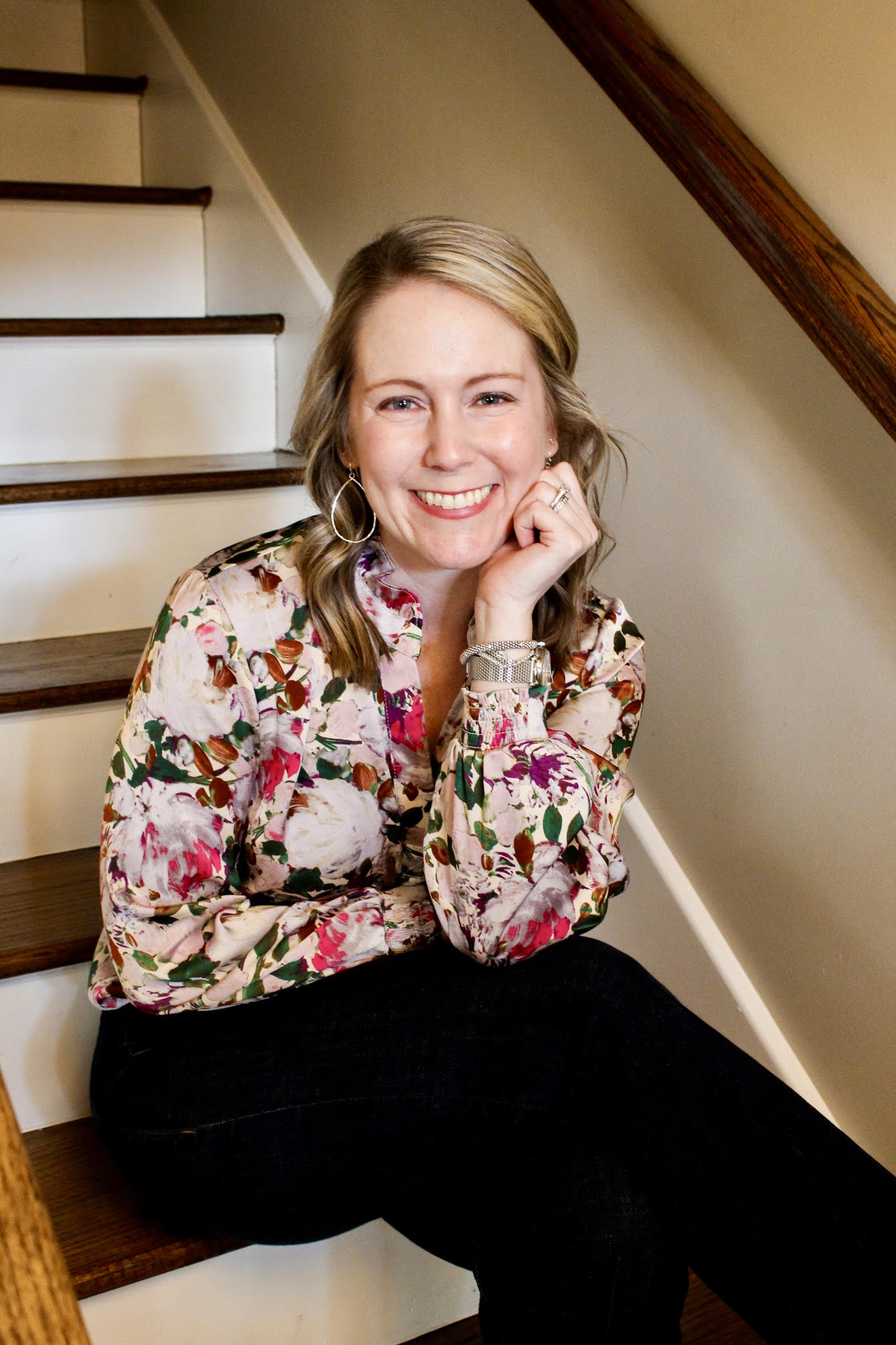
Founder
Julie Webb has two decades of diverse insurance industry experience holding various leadership positions during that time. Most recently, she was the Principal at MPB Insurance, a scratch independent agency she started in March of 2020 (yes that March!). Prior to that, she was the Regional Vice President for a large insurance agency network with responsibility for the Mid-Atlantic territory. She began her insurance career with GEICO in a Leadership Development Program where she ultimately built and led a regional sales and service call center in Buffalo, New York. Julie holds both her CIC and CPCU designations and is a proud graduate of the University of Pittsburgh where she studied business. A strong advocate for women in insurance, Julie led the Women’s Leadership Network at MPB and founded a local chapter of the Women’s Business League to provide a space for professional women to network and grow together. In addition to this, she serves as the Board Chair for Big Brothers Big Sisters of South-Central PA and enjoys volunteering with Girl Scouts, Girls on the Run, and Junior Achievement. In these roles, she’s committed to helping younger generations reach their full potential (and sprinkling a little bit of insurance awareness on top, too!). It's her advocacy work that led her to found JMW Collective, a leadership consulting practice focused first on the insurance space. Through group and individual coaching, workshops, and speaking engagements, Julie is on a mission to empower organizations and leaders to design a thriving industry that is profitable, in… Read More